Article: The Science Of Skin Health, From The Inside Out — With Pia Baroncini
The Science Of Skin Health, From The Inside Out — With Pia Baroncini
What does it take to support optimal skin health over the long term?
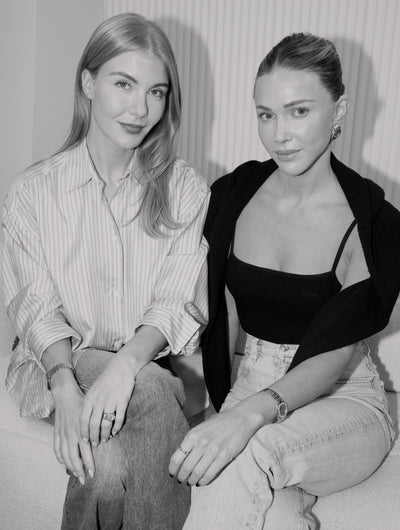
In conversation with Pia Baroncini, Par Olive Founder and CEO Olivia Boyd-Smith goes behind the formula to discuss collagen, nutrition, ingredient sourcing, Australian standards and the considered approach to skin health that inspired Par Olive.

Listen to the full conversation on Everything Is The Best:
5 Takeaways From Olivia’s Conversation With Pia Baroncini
01 — Skin Health Isn’t Just About What You Put On Your Skin
For Olivia, skin health is about taking a comprehensive approach — from what you put on your skin to what you put into your body.
“Topical, ingestible and then treatment. Okay. So definitely all three.
I think that we need to be really honest as women with one another. So I use a few really incredible topical brands that are my mainstays.”
02 — Consistency Matters As Much As Intention
For Olivia, healthy habits aren’t about perfection. They’re about what you consistently do over time.
“It’s what you do most of the time.
I eat really well most of the time. I look after my skin. I do a few selective things. I speak to experts.”
Her own approach to nutrition is similarly considered:
“I generally try to front load my day with as many nourishing skin ingredients in the morning first thing.
Supplements – obviously I take our Marine Collagen Superpowder every day. Two teaspoons in my oatmeal or in my coffee.”
03 — The Standard Should Come Before The Claim
Par Olive was developed within Australia’s more rigorous regulatory environment, where Olivia says clinical evidence and dosage are fundamental to the formulation process.
“You have to use clinical dosages, you have to have clinical studies behind every single ingredient before you can even print the label.
You have to show that you have the clinical studies behind those specific ingredients, show that you’re using the clinical dosage before you can even print your label.
We go through batch tests for heavy metals, for pesticides on the actual individual ingredients and then the final formulation.
I’ll always keep the brand made in Australia because I think it’s such a key point of difference that we need.”
04 — Where Your Collagen Comes From Matters
For Olivia, knowing where an ingredient comes from is fundamental — particularly when you’re taking it every day.
“I’m so conscious of the food that I ingest and I go to local butchers, I go to local fishmongers, I go to the farmers’ markets and I like to know where my food is coming from. And I thought why do people not have that same approach with supplements?
Especially when collagen, which was our first product, it’s animal derived. You’re taking it every single day.
[Our collagen is] wild-caught from Norway. So we can trace every jar down to the time of catch and the registration of the boat.”
Pia: “Registration of the boat?”
Olivia: “Of the boat, the time of catch and registration of the boat. So full traceability.”
05 — Look Beyond The Word “Collagen”
When Pia asks what makes Par Olive’s collagen different, Olivia points to the formulation, sourcing and standards behind it.
“Because they’re made in Australia, it’s a listed medicine. So we have clinical dosages of every single ingredient.
We use a clinical dose of our collagen peptides. They’re Dermatest clinically proven, have over 90% absorption, which is so important.”
And the formula itself is intentionally simple:
“We don’t have any fillers. We don’t have any flavourings.
The coconut milk, which is our best seller, is organic coconut flesh. It’s not flavouring.”
For Olivia, that same level of consideration extends to how Par Olive develops new products:
“We only launch one product a year.
It takes over two and a half years for us to develop a product and we develop the product with dermatologists in Australia.
It’s really creating through needs. Like if there’s a really great product on the market in that space, like I don’t really want, I don’t want to develop it.”